Agricultural News

chatgpt image jun 19, 2026, 07 39 30 pm

Monkey Menace Forces Farmers Away from Vegetable Cultivation

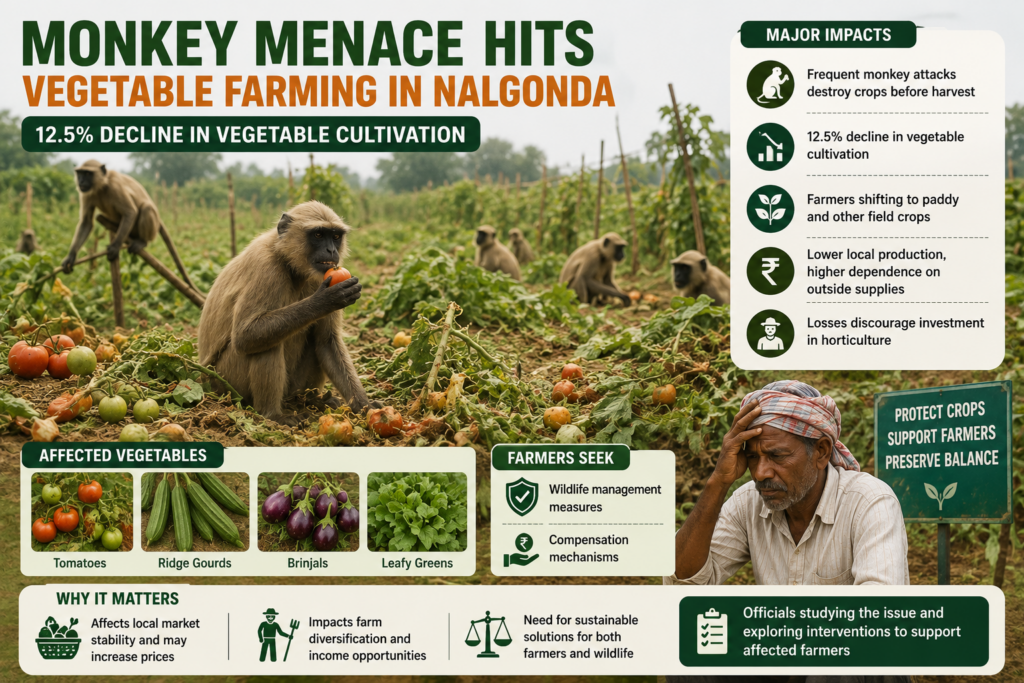
A growing monkey menace has emerged as a major challenge for vegetable farmers in Nalgonda, contributing to a noticeable decline in cultivation across several areas of the district. According to horticulture officials, vegetable cultivation has fallen by approximately 12.5 percent as farmers increasingly abandon vulnerable crops due to repeated crop damage. For years, Nalgonda maintained strong production of vegetables such as tomatoes, ridge gourds, brinjals, and leafy greens. However, farmers report that monkey attacks have become more frequent, resulting in substantial losses. Animals often destroy crops before harvest, making vegetable cultivation financially risky. Many cultivators have responded by shifting their land toward crops perceived as less vulnerable, including paddy and other field crops. While this strategy reduces immediate risks, it has also contributed to lower local vegetable production and increased dependence on supplies from neighboring districts and states. Farmers say that repeated losses have discouraged investment in horticulture despite favorable market demand. They are seeking practical solutions from authorities, including wildlife management measures and compensation mechanisms. Horticulture experts warn that declining vegetable cultivation could affect local market stability and lead to higher consumer prices. Reduced production may also impact farm diversification efforts and income opportunities for growers. Officials are studying the issue and exploring potential interventions to support affected farmers. The challenge highlights the growing interaction between agriculture and wildlife management, underscoring the need for sustainable solutions that protect both farmer livelihoods and ecological balance.

Monkey Menace Forces Farmers Away from Vegetable Cultivation Read More »
chatgpt image jun 19, 2026, 07 37 37 pm

Farmers Demand Action Over Alleged Procurement Irregularities

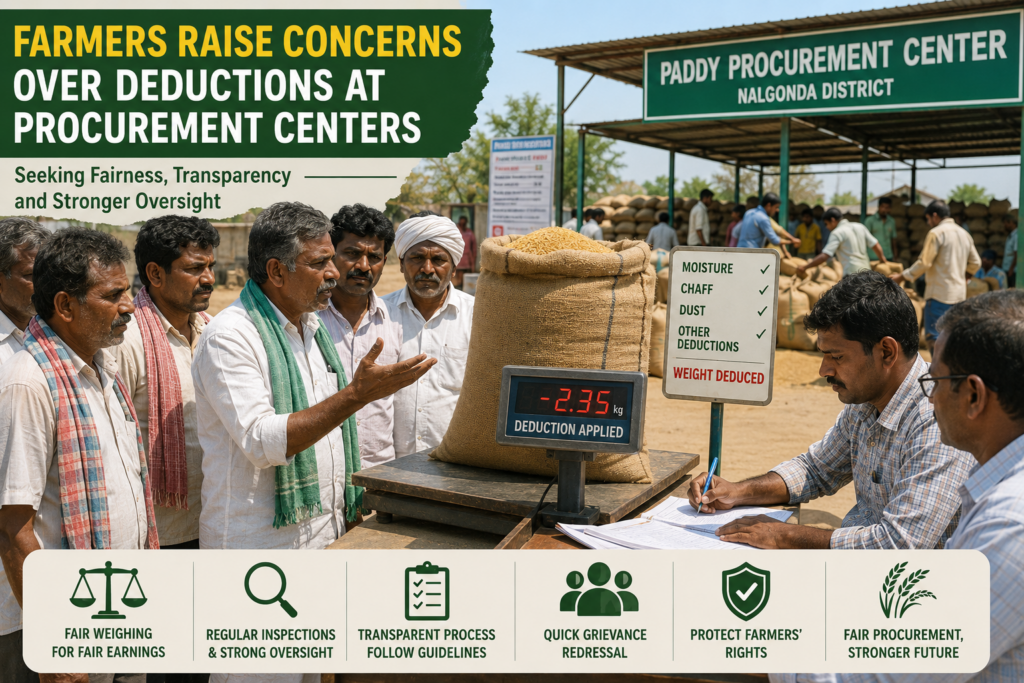
Despite record procurement volumes, several farmer groups in Nalgonda have raised concerns regarding alleged irregularities at procurement centers and rice mills. Farmers claim that unfair deductions are being applied during weighing procedures, reducing the quantity of grain officially recorded and affecting their earnings. According to farmer representatives, some procurement facilities and mill operators have cited moisture content and chaff levels as reasons for imposing weight reductions. Producers argue that excessive deductions can significantly impact their income, especially after investing considerable resources in cultivation and harvesting. Agricultural organizations have urged district authorities to strengthen oversight mechanisms and ensure that procurement guidelines are followed uniformly. They have requested regular inspections, transparent weighing procedures, and grievance redressal systems capable of addressing complaints quickly. Farmers emphasize that government procurement programs are intended to provide fair compensation and market stability. Any inconsistencies in implementation, they argue, undermine confidence in the system and create financial difficulties for cultivators. Officials have acknowledged the concerns and indicated that complaints will be reviewed through appropriate channels. Monitoring teams may conduct inspections at procurement centers to verify adherence to established standards and procedures. Agricultural experts note that transparency and accountability are essential for maintaining trust in procurement operations. Effective oversight can help protect farmers while ensuring that quality standards are maintained. The issue has sparked discussions among farmer groups, who continue to seek stronger safeguards to ensure equitable treatment during the procurement process.

Farmers Demand Action Over Alleged Procurement Irregularities Read More »

chatgpt image jun 19, 2026, 07 25 55 pm

Nalgonda Achieves Record Single-Day Paddy Procurement Milestone

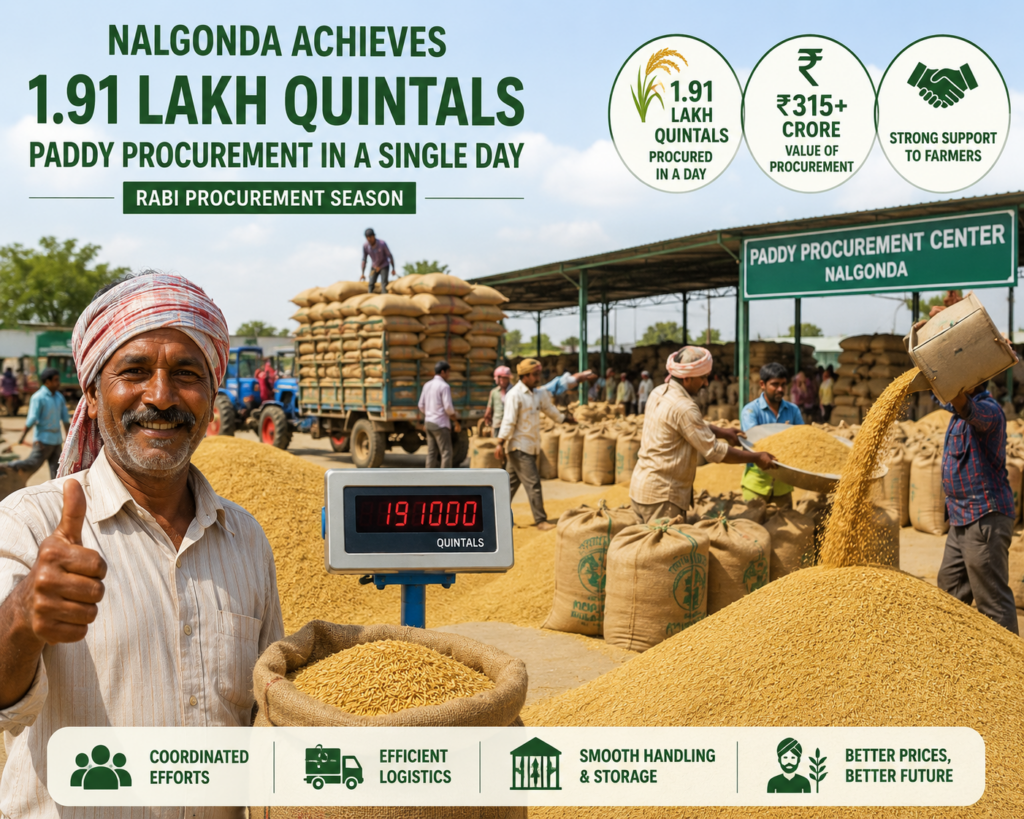
Nalgonda district has achieved a major milestone in agricultural procurement by recording the purchase of approximately 1.91 lakh quintals of paddy in a single day during the ongoing Rabi procurement season. The achievement highlights the district’s strong agricultural productivity and the effectiveness of procurement operations conducted across multiple purchase centers. Under the supervision of District Collector B. Chandrasekhar, officials coordinated large-scale logistics to manage the unprecedented inflow of paddy from farmers. Procurement teams worked extensively to ensure smooth handling, transportation, and storage of grain arriving from different parts of the district. Authorities estimated the value of the procured stock at more than ₹315 crore, representing a significant financial benefit for the farming community. The successful procurement drive enabled farmers to sell their produce through official channels and receive payments under government-supported procurement mechanisms. Officials credited the achievement to coordinated efforts involving agriculture, civil supplies, cooperative departments, and procurement agencies. Efficient transportation arrangements and timely grain lifting played a crucial role in managing the record arrivals. Farmers welcomed the procurement initiative, stating that efficient purchasing systems reduce uncertainty and help ensure fair market access. Many producers appreciated the efforts made to minimize delays and streamline procurement procedures. The milestone reflects Nalgonda’s position as one of Telangana’s key agricultural districts. Authorities expect procurement activities to continue at a strong pace as remaining stocks arrive at designated centers across the region.

Nalgonda Achieves Record Single-Day Paddy Procurement Milestone Read More »

chatgpt image jun 19, 2026, 07 27 39 pm

Rythu Bharosa Assistance to Reach Farmers Through Direct Bank Transfers

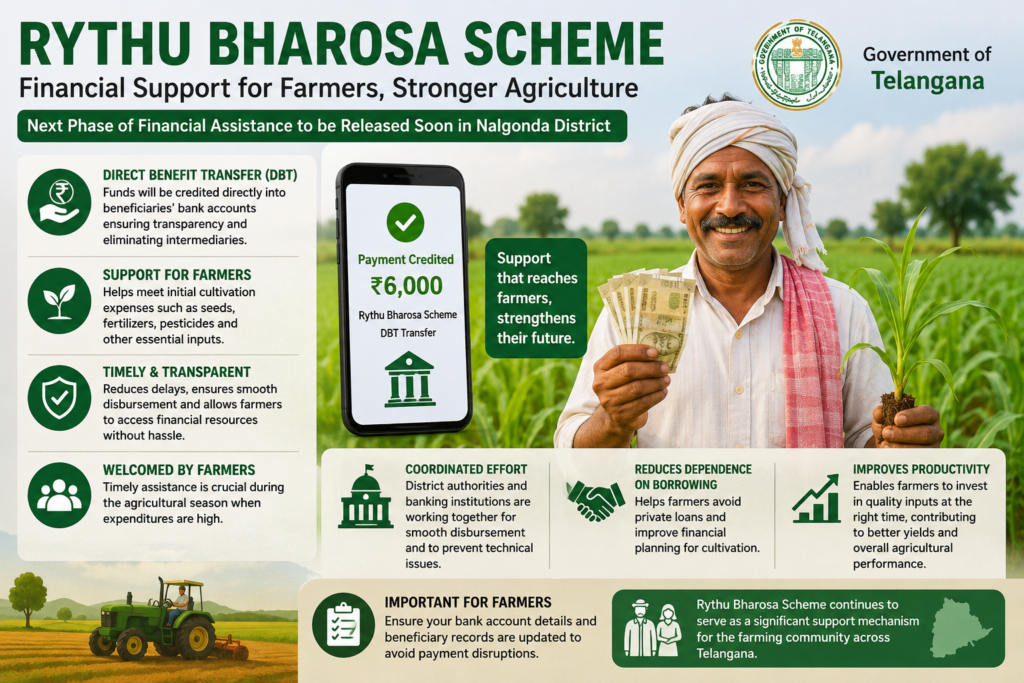
The Telangana government has finalized preparations for the next phase of financial support under the Rythu Bharosa scheme, providing relief to thousands of farmers across Nalgonda district. The assistance is expected to be released following government approval processes, with funds credited directly into beneficiaries’ bank accounts through the Direct Benefit Transfer (DBT) system. The scheme is designed to support farmers during the crucial agricultural season by helping them meet initial cultivation expenses. Beneficiaries often use the assistance for purchasing seeds, fertilizers, pesticides, and other essential farm inputs required before sowing operations begin. Officials stated that direct transfers ensure transparency, reduce delays, and allow farmers to access financial resources without intermediaries. District authorities and banking institutions are coordinating efforts to facilitate smooth disbursement and prevent technical issues during the transfer process. Farmer organizations have welcomed the initiative, emphasizing that timely financial assistance is particularly important during the beginning of the agricultural season when expenditure requirements are high. The support can help reduce dependence on private borrowing and improve financial planning for cultivation activities. Agricultural experts note that direct income support programs contribute to farm stability by enabling cultivators to invest in essential inputs at the appropriate time. This can positively influence productivity and overall agricultural performance. Authorities have urged eligible farmers to ensure that bank account details and beneficiary records are updated to avoid payment disruptions. The scheme continues to serve as a significant support mechanism for the farming community across Telangana.

Rythu Bharosa Assistance to Reach Farmers Through Direct Bank Transfers Read More »

chatgpt image jun 19, 2026, 07 21 01 pm

State Seminar Calls for Revival of Sweet Lime Cultivation in Nalgonda

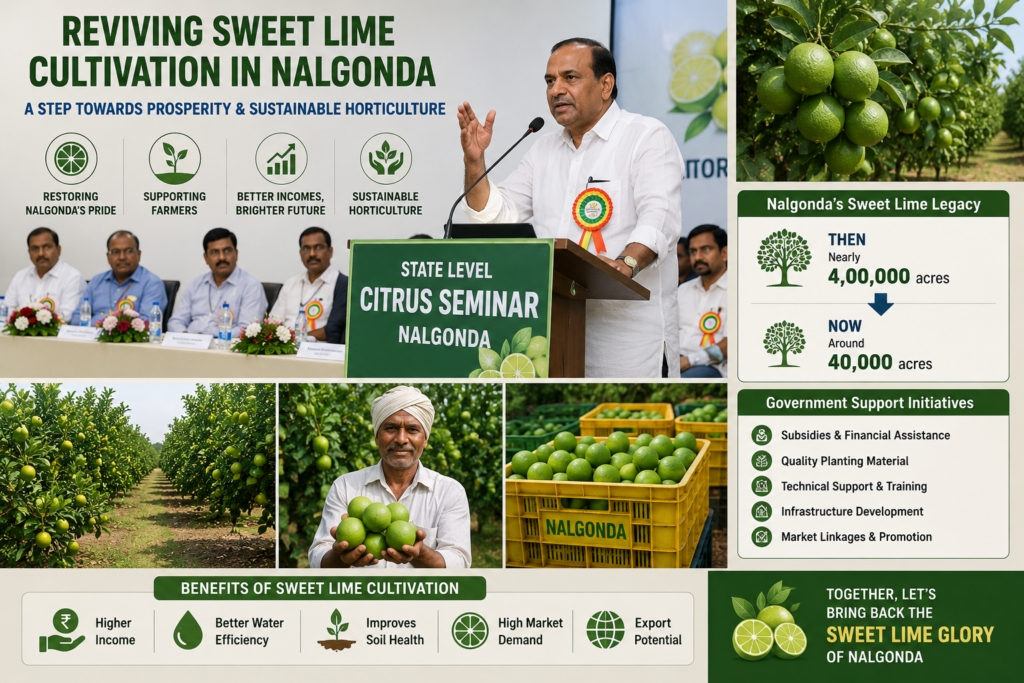
A state-level citrus seminar conducted in Nalgonda has renewed focus on reviving sweet lime cultivation, a crop once synonymous with the district’s agricultural identity. During the event, Roads and Buildings Minister Komatireddy Venkat Reddy emphasized the need for structured interventions to restore Mosambi cultivation and support horticulture-based farming. Historically, Nalgonda was known for extensive sweet lime orchards spread across nearly four lakh acres. However, changing market conditions, disease concerns, and shifts in cultivation preferences have reduced the cultivated area to approximately 40,000 acres. Agricultural experts believe this decline has affected both farm incomes and the district’s horticultural prominence. The government is considering measures including subsidies, technical support, improved planting material, and infrastructure development to encourage farmers to return to sweet lime cultivation. Officials stated that horticultural crops often provide higher value returns while contributing to better soil conservation and resource efficiency. Experts at the seminar discussed modern orchard management techniques, disease control measures, post-harvest handling, and marketing opportunities. They highlighted the growing demand for citrus fruits in domestic and export markets, creating potential opportunities for farmers willing to invest in horticulture. Many farmers attending the seminar expressed interest in exploring sweet lime cultivation if adequate support mechanisms are provided. Agricultural authorities believe that a coordinated revival strategy could significantly increase cultivation area over the coming years. The initiative aims to strengthen horticulture in Nalgonda while creating sustainable income opportunities for farming communities across the district.

State Seminar Calls for Revival of Sweet Lime Cultivation in Nalgonda Read More »

chatgpt image jun 19, 2026, 07 17 49 pm

Agriculture Department Urges Farmers to Shift Toward Water-Efficient Crops

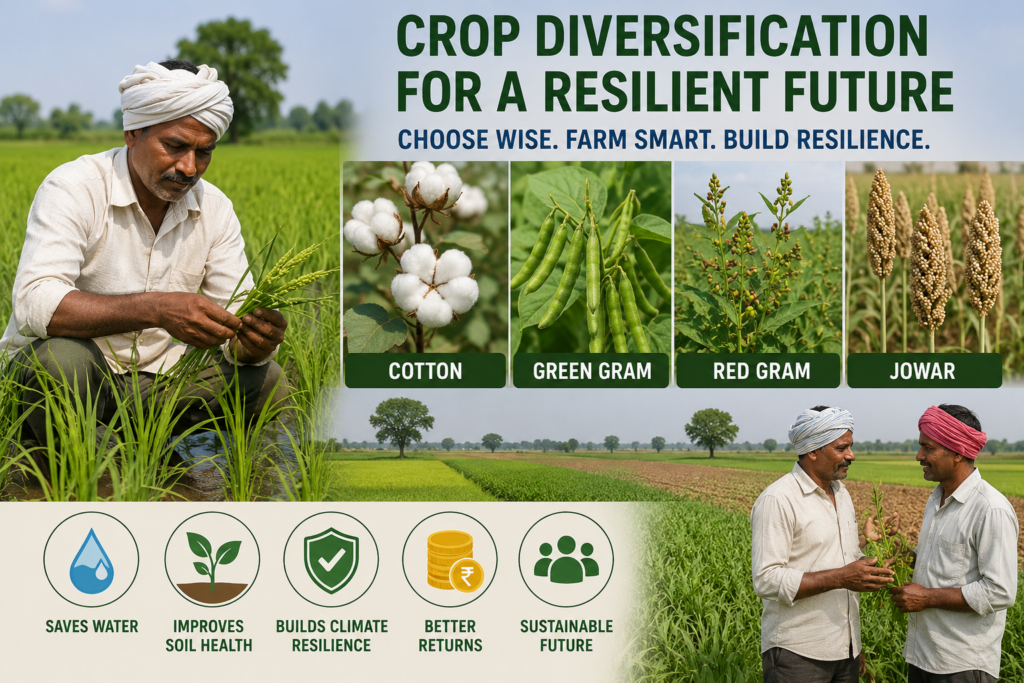
Agricultural officials in Nalgonda have intensified efforts to promote crop diversification amid growing concerns about water availability and changing climatic conditions. District Agriculture Officer Sridhar Reddy has advised farmers to consider cultivating dry and water-efficient crops instead of relying heavily on water-intensive paddy cultivation. Experts point to rainfall uncertainties, fluctuating reservoir levels, and long-term climate patterns as factors that may impact water availability during the coming agricultural seasons. To minimize risks, authorities are encouraging farmers to adopt crops such as cotton, green gram, red gram, and jowar, which require comparatively less irrigation while offering viable economic returns. The department believes that diversified cropping systems can improve resilience against climate variability and reduce dependence on a single crop. Agricultural scientists have highlighted the benefits of balanced crop selection, including improved soil health, reduced water consumption, and better long-term sustainability. Awareness programs are being conducted across villages to educate farmers about suitable alternatives and modern cultivation practices. Officials are also providing technical guidance regarding seed selection, nutrient management, and market opportunities for alternative crops. Farmers have shown increasing interest in exploring diversified farming options, particularly in areas vulnerable to water shortages. Many believe that adopting drought-tolerant crops could help stabilize incomes and reduce production risks. Authorities emphasized that crop diversification is not intended to replace paddy entirely but rather to encourage balanced agricultural planning. The initiative aims to strengthen the district’s agricultural resilience while ensuring efficient use of available natural resources.

Agriculture Department Urges Farmers to Shift Toward Water-Efficient Crops Read More »

chatgpt image jun 19, 2026, 07 10 09 pm

Nalgonda Stocks 19,000 Metric Tonnes of Urea Ahead of Vanakalam Season

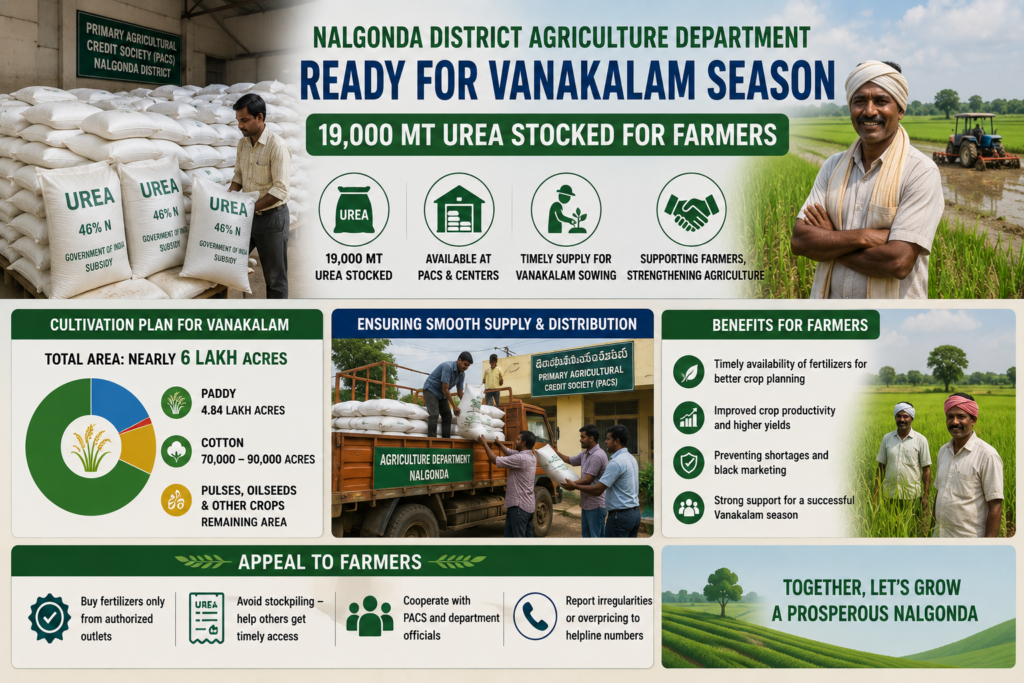
The Nalgonda District Agriculture Department has completed extensive preparations for the upcoming Vanakalam cropping season by stocking approximately 19,000 metric tonnes of urea across Primary Agricultural Credit Societies (PACS) and fertilizer distribution centers. Officials stated that the fertilizer reserves have been strategically positioned to ensure timely availability for farmers as sowing activities begin across the district. Agricultural authorities estimate that cultivation during the monsoon season will cover nearly six lakh acres. Paddy is expected to dominate the cropping pattern, occupying around 4.84 lakh acres, while cotton cultivation is projected to cover between 70,000 and 90,000 acres. Additional acreage will be utilized for pulses, oilseeds, and other seasonal crops. The department has emphasized that adequate fertilizer availability is essential for maintaining crop productivity and preventing shortages during peak agricultural operations. Officials are closely monitoring supply chains and coordinating with cooperative societies to ensure smooth distribution throughout the district. Farmers have welcomed the advance stocking initiative, noting that timely access to fertilizers allows them to plan cultivation activities more effectively. Agriculture experts believe that sufficient fertilizer availability at the beginning of the season can significantly improve crop management and reduce uncertainty among cultivators. Authorities have also advised farmers to purchase fertilizers only through authorized channels and avoid unnecessary stockpiling. Continuous monitoring mechanisms have been established to prevent black marketing and ensure equitable distribution. The initiative reflects the administration’s commitment to supporting agricultural productivity and ensuring a successful Vanakalam season for farmers across Nalgonda district.

Nalgonda Stocks 19,000 Metric Tonnes of Urea Ahead of Vanakalam Season Read More »